Taming the Data Beast: Why Data Hygiene is Crucial for Offline-First Apps
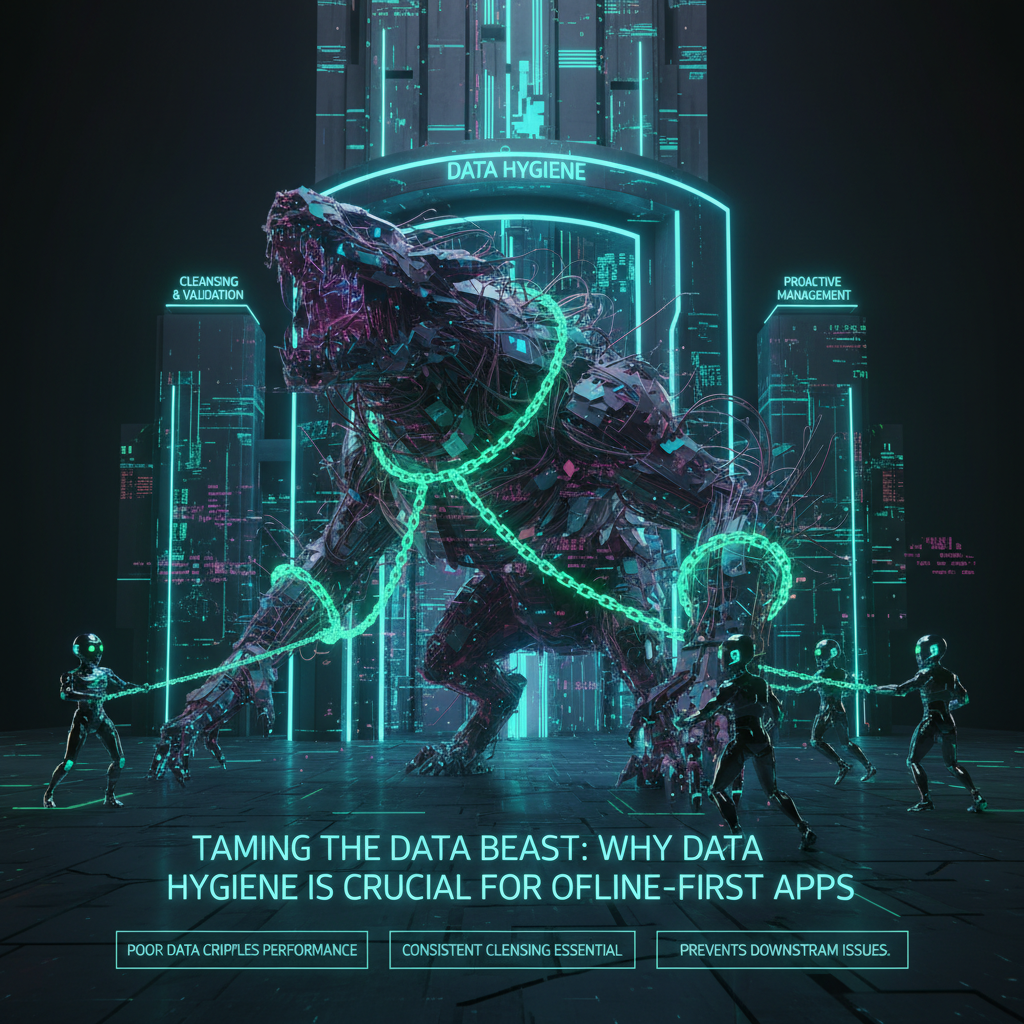
Key Takeaways:
- Poor data hygiene cripples offline-first app performance.
- Consistent data cleansing and validation are essential.
- A proactive approach to data management prevents downstream errors.
- Understanding your data architecture is the first step to improvement.
- Ignoring data hygiene can lead to costly operational inefficiencies.
The Silent Killer of Offline-First: Dirty Data
Imagine building a magnificent bridge, only to discover the concrete used was riddled with impurities. The bridge might look impressive initially, but its structural integrity is compromised. Similarly, an offline-first app built on a foundation of dirty data is destined to fail. The promise of seamless offline functionality crumbles when the data it relies upon is flawed.
The problem isn’t just about incorrect entries. It’s about inconsistencies, redundancies, and outdated information polluting the entire system. This ‘data grime’ propagates through synchronised devices, corrupting decision-making processes and undermining the very purpose of the application.
The Data Architecture Behind the Mess
Data hygiene issues rarely arise in isolation. They are symptoms of deeper problems within the data architecture. Think of your data architecture as the plumbing system of your business. If the pipes are poorly designed or clogged with debris, the entire system suffers. Common culprits include:
- Lack of Standardised Input Formats: Allowing free-form text entry without validation leads to inconsistent data representations.
- Absence of Data Governance Policies: Without clear guidelines on data ownership, quality, and usage, data integrity degrades over time.
- Insufficient Data Validation Processes: Failing to validate data at the point of entry allows errors to slip through the cracks.
- Poor Integration Between Systems: Data silos prevent a holistic view of information, making it difficult to identify and resolve inconsistencies.
These architectural flaws create a breeding ground for dirty data, turning your offline-first app into a liability rather than an asset.
Why Offline-First Amplifies the Problem
The beauty of offline-first applications lies in their ability to function independently of a network connection. However, this advantage becomes a significant weakness when data hygiene is poor. Because the application operates locally, errors are compounded and replicated across devices without immediate central oversight. Consider a field service app where technicians update inventory levels offline. If the initial inventory data is inaccurate, those inaccuracies are duplicated and amplified each time a technician syncs their device. The consequences can range from inaccurate stock counts to missed service appointments.
Strategies for Data Cleansing and Validation
Fortunately, data hygiene is not an insurmountable challenge. A proactive approach, coupled with the right tools and processes, can restore data integrity and unlock the full potential of your offline-first app. Consider these strategies:
1. Data Audits: Uncovering the Dirt
The first step is to conduct a thorough data audit to identify areas of concern. This involves analysing data for inconsistencies, errors, and redundancies. Think of it as a forensic investigation, meticulously examining every piece of evidence to uncover the truth about your data.
2. Data Standardisation: Establishing Order
Once you’ve identified the problem areas, establish standardised data formats and validation rules. This ensures that data is consistent and accurate across all systems. For example, implement drop-down menus for predefined categories instead of free-form text fields.
3. Data Governance: Setting the Rules
Develop clear data governance policies that define data ownership, access rights, and quality standards. These policies should be communicated to all stakeholders and enforced consistently.
4. Automated Data Validation: Preventing Future Contamination
Implement automated data validation processes at the point of entry. This can involve using scripts to check data against predefined rules and flagging any errors for correction. The aim is to prevent bad data from entering the system in the first place.
5. Data Cleansing Tools: Scrubbing Away the Grime
Utilise data cleansing tools to identify and correct errors, remove duplicates, and standardise data formats. These tools can automate much of the manual work involved in data cleansing, saving time and resources.
Dendro Logic Perspective
At Dendro Logic, we understand that data architecture isn’t just about databases and servers. It’s about building a robust and reliable foundation for your business logic. Poor data hygiene is like a virus that infects your entire system, leading to unreliable decision-making and operational inefficiencies. By taking a proactive approach to data cleansing and validation, you can ensure that your offline-first app delivers the value it promises.
Is your data undermining the performance of your offline-first app? Contact us today for a data audit and let us help you restore data integrity.