Taming the Cloud: Controlling Infrastructure Costs
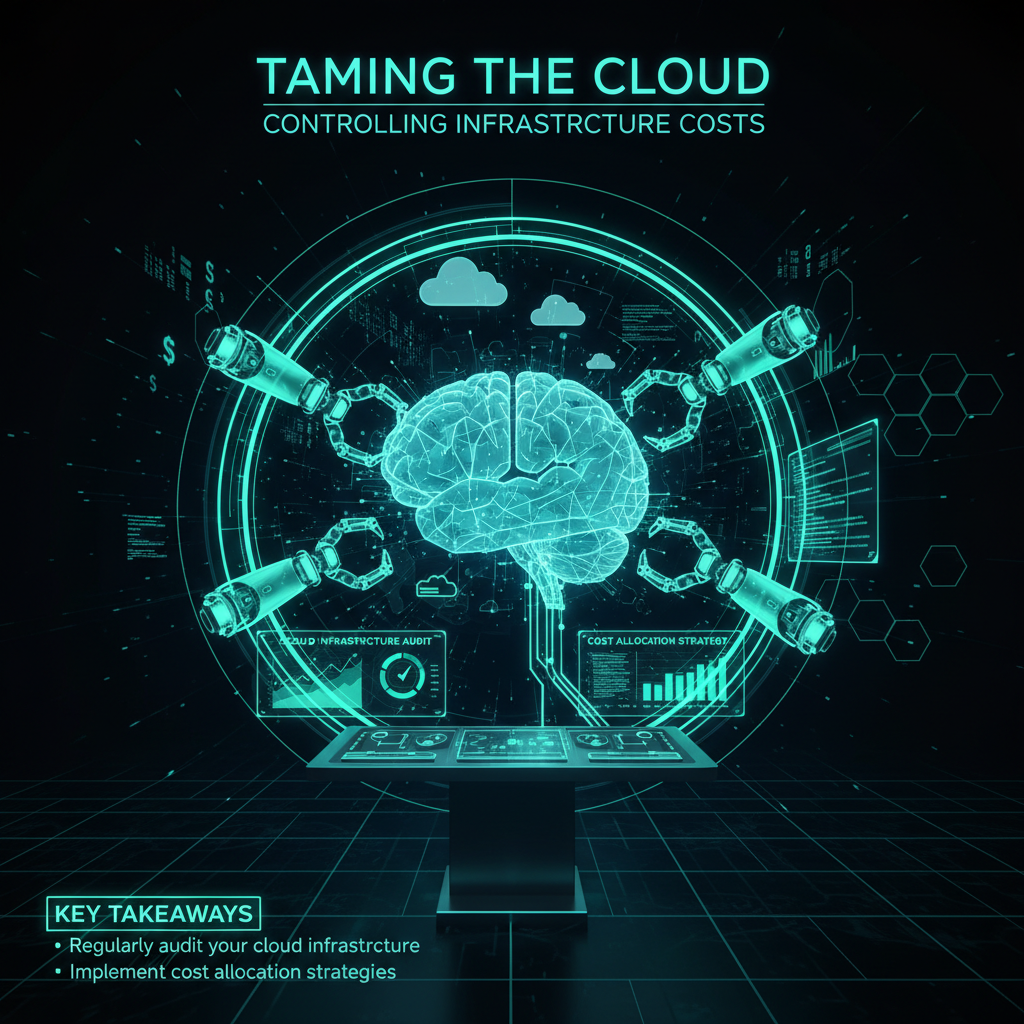
Taming the Cloud: Controlling Infrastructure Costs
Key Takeaways
- Regularly audit your cloud infrastructure to identify overspending.
- Implement cost allocation strategies to track expenses accurately.
- Optimise resource utilisation by scaling services based on demand.
- Automate cost management processes to reduce manual errors.
- Prioritise security investments to avoid costly data breaches.
Cloud infrastructure offers incredible scalability and flexibility, but it can also be a Pandora’s Box of unexpected costs. Uncontrolled spending can quickly erode profit margins, particularly for data-intensive applications and the sensitive environments that often accompany them. It’s essential for Operations Directors and CTOs to understand how to manage cloud costs effectively to maximise return on investment.
Understanding Cloud Cost Drivers
Think of your cloud infrastructure as a sprawling city. Each service, each application, each database is like a building consuming resources. Without proper planning and management, this city can quickly become inefficient and expensive. The primary drivers of cloud costs include:
- Compute Resources: Virtual machines, containers, and serverless functions all contribute to compute costs.
- Storage: Storing data, especially large volumes of it, incurs significant charges.
- Networking: Data transfer between regions, internet traffic, and virtual network connections all add to networking costs.
- Database Services: Managed databases offer convenience but can be expensive, particularly for high-performance workloads.
- Security Costs: Services to protect sensitive environments also increase costs
Each of these components needs careful consideration and optimisation to keep costs under control. Failing to do so is like leaving the lights on in every room of your city, even when no one is there.
Implementing Cost Allocation Strategies
Effective cost management starts with understanding where your money is going. This is where cost allocation comes in. Think of it as assigning each expense to a specific department or project. This allows you to track spending patterns and identify areas where costs can be reduced. Without cost allocation, you are flying blind, unable to pinpoint the sources of overspending.
Several tools and techniques can help with cost allocation, including tagging resources, using cost categories, and implementing chargeback models. By accurately tracking expenses, you can make informed decisions about resource utilisation and optimise your cloud spending.
Optimising Resource Utilisation
One of the biggest opportunities for cost savings lies in optimising resource utilisation. This means ensuring that you are only paying for the resources you actually need. In many cases, organisations over-provision resources, leading to wasted capacity and unnecessary expenses. Think of it as having a fleet of lorries that are only half full on every journey. Optimising their routes and loading would be a massive saving.
Techniques like auto-scaling, right-sizing instances, and using spot instances can help you optimise resource utilisation and reduce costs. Auto-scaling automatically adjusts the number of resources based on demand, ensuring that you only pay for what you use. Right-sizing instances involves selecting the appropriate instance type for your workload, avoiding over-provisioning. Spot instances offer discounted prices for unused capacity, but they can be terminated with little notice.
Automating Cost Management Processes
Manual cost management can be time-consuming and prone to errors. Automating cost management processes can help you streamline operations, reduce manual effort, and improve accuracy. Think of it as setting up an automated factory line to replace manual assembly. Automating includes configuring cost alerts, setting budgets, and automating resource scaling.
Cost alerts notify you when your spending exceeds predefined thresholds, allowing you to take corrective action promptly. Setting budgets helps you stay within your allocated spending limits. Automating resource scaling ensures that your resources are automatically adjusted based on demand.
The Dendro Logic Perspective
At Dendro Logic, we understand that managing cloud infrastructure costs is not just about saving money. It’s about optimising your entire IT infrastructure to support your business goals. By implementing effective cost management strategies, you can free up resources to invest in innovation and growth. We specialise in untangling complex cloud architectures and re-building them to be more cost-effective. Contact us today to learn more about how we can help you optimise your cloud infrastructure and achieve your business objectives.
Ready to take control of your cloud infrastructure costs? Contact us today for a comprehensive audit of your cloud environment.