Proactive Compliance Through Digital Twins: Leveraging ‘The Golden Thread for Real-Time Risk Assessment and Predictive Safety Audits
Proactive Compliance Through Digital Twins: Leveraging ‘The Golden Thread for Real-Time Risk Assessment and Predictive Safety Audits
Key Takeaways:
- Enhanced Compliance: Digital Twins, underpinned by a robust Golden Thread of data, create an immutable audit trail, simplifying compliance and minimising risks.
- Real-Time Risk Assessment: Continuous data flow enables proactive identification and mitigation of potential hazards, moving from reactive to predictive safety management.
- Predictive Audits: By analysing historical data and trends, Digital Twins facilitate predictive safety audits, optimising maintenance schedules and reducing downtime.
- Legacy System Integration: A well-designed Digital Twin strategy considers the need to incorporate existing legacy systems, ensuring all data is interconnected and accessible.
- Long-Term Value: Investing in Data Continuity establishes the systems that will last, and ensure that a ‘single source of truth’ persists over time.
In the modern landscape of logistics, construction, and field services, reactive compliance is no longer sufficient. The traditional approach, relying on fragmented data silos and manual processes, leaves organisations vulnerable to unforeseen risks and regulatory penalties. Imagine trying to determine the structural integrity of a bridge using only incomplete records – the potential for error is immense. This reactive stance not only increases operational costs but also jeopardises safety and long-term sustainability.
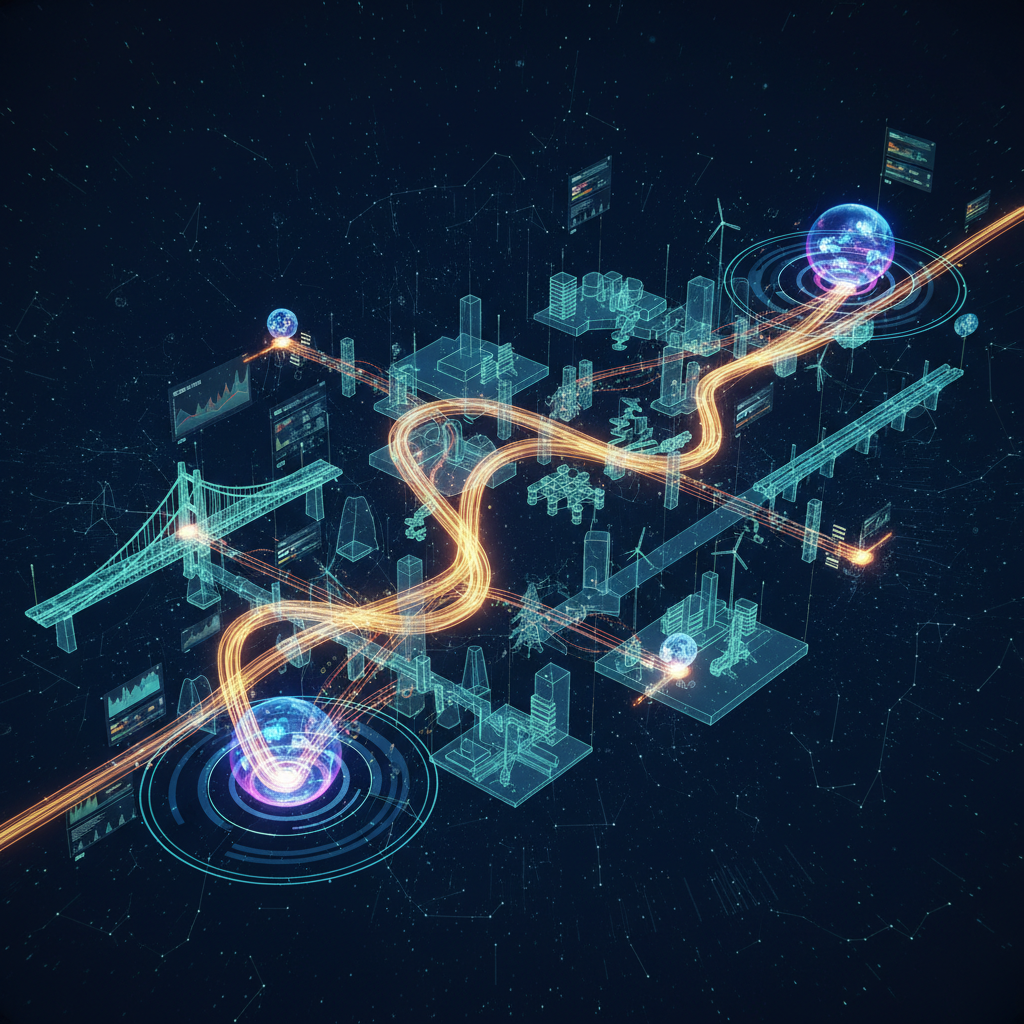
The solution lies in embracing proactive compliance through Digital Twins, powered by the concept of ‘The Golden Thread. A Digital Twin is a virtual representation of a physical asset or system, continuously updated with real-time data from various sources. The Golden Thread represents the unbroken chain of information that connects every stage of an asset’s lifecycle, from initial design to ongoing maintenance and eventual decommissioning. This continuity stems from permanently linking design, construction, operation, and maintenance data into a single, accessible source of truth.
Consider a large-scale construction project. Traditionally, design documents, material specifications, inspection reports, and maintenance logs are stored in disparate systems, making it difficult to track changes, identify potential issues, and ensure compliance with building codes. With a Digital Twin, all of this information is centralised and interconnected. Any modification to the design is immediately reflected in the virtual model, allowing engineers to assess the impact on structural integrity and safety. Similarly, real-time data from sensors embedded in the structure can be used to monitor performance, detect anomalies, and predict potential failures before they occur.
Real-Time Risk Assessment
The ability to monitor assets in real-time is a cornerstone of proactive compliance. Digital Twins enable organisations to move from reactive to predictive risk management. For example, in a logistics operation, a Digital Twin of a warehouse can track environmental conditions, equipment performance, and worker movements. If a potential hazard is detected, such as a temperature spike in a storage area or a malfunctioning piece of machinery, the system can automatically trigger alerts and initiate corrective actions. This proactive approach minimises the risk of accidents, reduces downtime, and improves overall operational efficiency.
Predictive Safety Audits
Traditional safety audits are often time-consuming, resource-intensive, and based on subjective assessments. Digital Twins revolutionise the audit process by providing objective, data-driven insights. By analysing historical data and trends, Digital Twins can predict potential safety risks and recommend targeted interventions. For instance, in a field service operation, a Digital Twin of a fleet of vehicles can track maintenance schedules, driver behaviour, and accident rates. This information can be used to identify high-risk drivers, optimise maintenance schedules, and implement targeted safety training programs. The result is a more efficient, effective, and proactive approach to safety management.
Building Systems that Last: Legacy Integration
One common challenge in implementing Digital Twins is the integration of existing legacy systems. Many organisations have invested heavily in older technologies that are not easily compatible with modern data platforms. However, it is crucial to incorporate these systems into the Digital Twin strategy to ensure a comprehensive and unified view of the asset. This might involve developing custom interfaces, using data connectors, or migrating data to a new platform. The key is to ensure that all relevant data is interconnected and accessible, regardless of its source or format. This is where the concept of Dendro Logic’s ‘Root System’ is analogous. The ‘root system’ integrates what is needed to ‘feed’ the application and ensure its longevity and the health of the core data.
Data continuity, enabled by a robust Golden Thread within a Digital Twin, provides an immutable and auditable history of a building or system’s lifecycle, significantly enhancing proactive compliance. Think of the rings of a tree. Each ring tells a story, a year of growth and change. Similarly, the Golden Thread weaves together the story of an asset, creating a permanent record of its evolution. This enduring data connectivity gives you the systems that last, the systems that prove their worth, and allow you to take control of your data.
Are you ready to establish your Golden Thread and unlock the full potential of proactive compliance? Contact us today to schedule an audit of your data continuity and discover how Digital Twins can transform your operations.