Offline-First: Why Gut Feeling Fails in Enterprise Operations
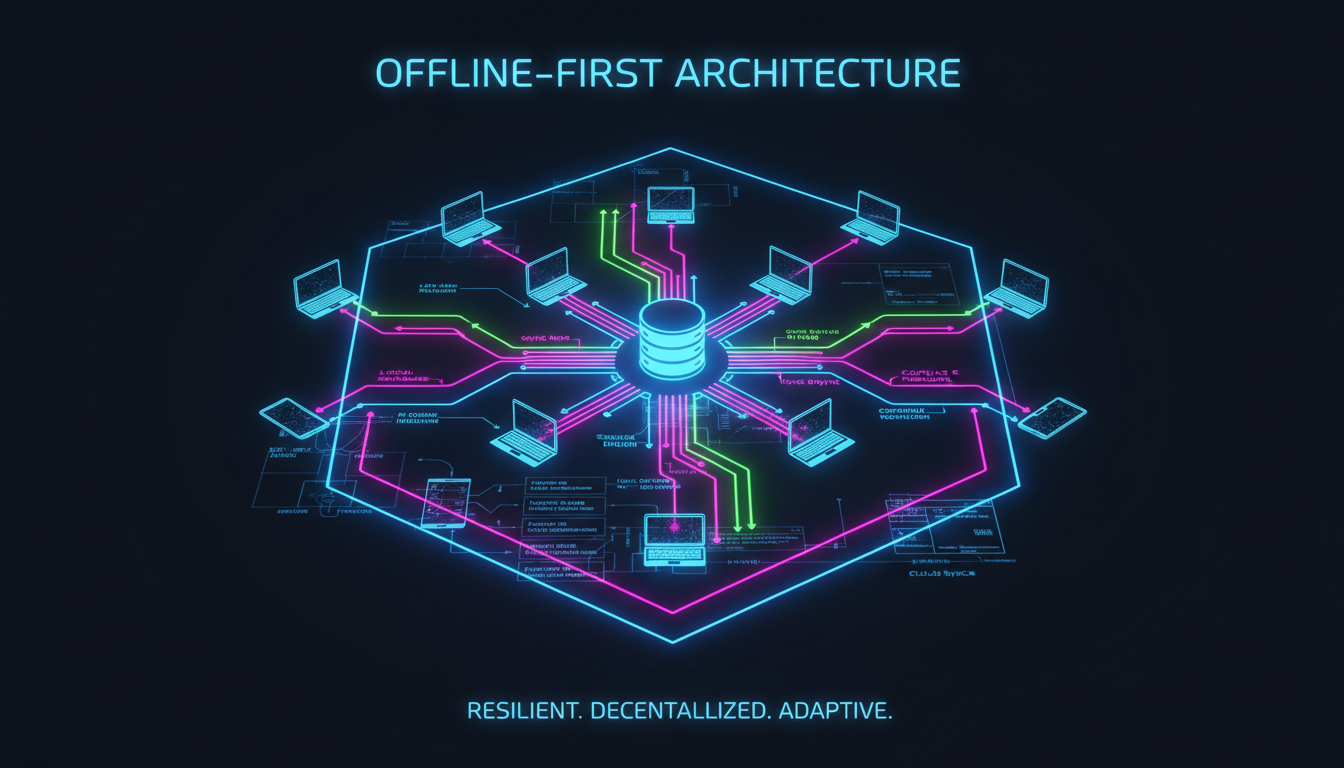
Offline-First: Why Gut Feeling Fails in Enterprise Operations
- Offline-first architecture enhances user experience and resilience by enabling functionality without constant network connectivity.
- Successful implementation requires robust data synchronisation and conflict resolution strategies.
- Relying on ‘gut feeling’ for data management in offline scenarios leads to inconsistencies and errors.
- Consider an audit of your data infrastructure to optimise for offline capabilities.
Imagine a construction foreman on a remote site, or a logistics driver in a cellular dead zone. Their ability to do their job shouldn’t hinge on a consistently strong signal. In these scenarios, relying on ‘gut feeling’ for data management becomes a risky gamble. The core principle of offline-first architecture is to prioritise local data access, ensuring that users can remain productive, regardless of network availability. This proactive approach ensures critical tasks aren’t interrupted, enhancing both efficiency and reliability.
The Foundation: Local Data, Global Consistency
Offline-first isn’t just about making an app ‘work offline’. It’s a fundamental shift in how data is handled. Think of it like a well-organised library where everyone has their own personal copy of the catalogue. The local database on the device acts as the primary source of truth, allowing for immediate data access and manipulation. This responsiveness dramatically improves the user experience, especially in environments with unreliable connectivity. The challenge then becomes keeping all these local copies synchronised with the central ‘master catalogue’.
Data Synchronisation: The Key to Harmony
Data synchronisation is the engine that powers offline-first applications. It’s the process of reconciling changes made to the local database with the central server and other devices. This process needs to be robust and efficient, capable of handling various scenarios, from intermittent connectivity to conflicting updates. Consider it like a complex dance where each device needs to communicate its changes and resolve any clashes with others, ensuring everyone stays in step.
Conflict Resolution: When Data Collides
Inevitably, conflicts will arise. Two users might edit the same record while offline, leading to discrepancies when the devices reconnect. Robust conflict resolution mechanisms are essential to handle these situations gracefully. Strategies include last-write-wins (the most recent change takes precedence), custom conflict resolution logic (based on specific business rules), or allowing users to manually resolve conflicts. Implementing effective conflict resolution is similar to having a skilled mediator, ensuring that disagreements are resolved fairly and data integrity is preserved.
Why ‘Gut Feeling’ Fails: The Data Architecture Perspective
Relying on ad-hoc solutions or ‘gut feeling’ for data management in offline scenarios is a recipe for disaster. Without a structured architecture and robust synchronisation strategies, data inconsistencies will proliferate, leading to errors, inefficiencies, and ultimately, poor decision-making. Imagine a company where each employee uses a different, disconnected spreadsheet to track inventory. The lack of a single, unified source of truth would quickly lead to chaos. Offline-first architecture demands a well-defined data model, clear synchronisation protocols, and automated conflict resolution to maintain data integrity.
Thinking your staff will ‘remember’ to do things in the right order or ‘know’ how to handle conflicts is relying on hope, not strategy. Hope is not a plan. It is essential to remember that hope is not a suitable foundation for managing sensitive data, particularly in environments subject to intermittent connectivity.
The Dendro Logic Perspective
At Dendro Logic, we believe that offline-first architecture is a strategic imperative for businesses operating in challenging environments. It’s not just about making an app work offline; it’s about building a resilient, data-driven organisation. We focus on the underlying logic and data architecture, ensuring that your applications can function reliably and efficiently, even when connectivity is limited. By converting legacy web tools into offline-first mobile apps and structuring chaotic data into automated decision trees, we empower businesses to make informed decisions, regardless of their location or network conditions. We help you transition from hope-based data management to a strategy-based offline architecture.
Ready to ditch the ‘gut feeling’ and build a solid offline-first strategy? Contact us today for an audit of your data infrastructure.