Capacitor vs. Native: Why Gut Feeling Fails in Enterprise Operations
Key Takeaways
- Native development introduces platform-specific data inconsistencies, creating a fragmented data landscape.
- Capacitor’s single codebase streamlines data synchronization, crucial for reliable offline-first enterprise applications.
- ‘Gut feeling’ decisions often overlook the complexities of data architecture, leading to scalability issues and increased operational costs.
- A structured, data-centric approach, facilitated by Capacitor, is vital for maintaining data integrity across all platforms.
- Schedule an audit to assess your current data architecture and identify areas for improvement.
The Hidden Cost of Platform Fragmentation
Enterprise operations often rely on the seamless flow of data across multiple platforms – web, iOS, and Android. A common pitfall is adopting a fragmented development approach, opting for native development for each platform based on perceived performance gains or immediate feature requirements. This approach quickly spirals into a complex web of data silos and synchronization challenges.
Data inconsistencies arise as each native application manages its data independently, leading to discrepancies in reporting, decision-making, and ultimately, operational efficiency. The ‘gut feeling’ that native performance is superior often overshadows the long-term architectural consequences.
Data Synchronization: The Achilles Heel of Native Development
Consider a field service application. With native development, each platform (iOS, Android, web) requires its own data synchronization logic. This means multiple codebases handling data transfer, conflict resolution, and offline storage. Each codebase is prone to errors, and maintaining consistency across them becomes a significant overhead.
For example, if a field technician updates a work order offline on their iOS device, the synchronization process must accurately and reliably propagate those changes to the central database and any other devices accessing the same data. Native development introduces multiple points of failure in this process, increasing the likelihood of data loss or corruption.
Capacitor: A Unified Data Architecture
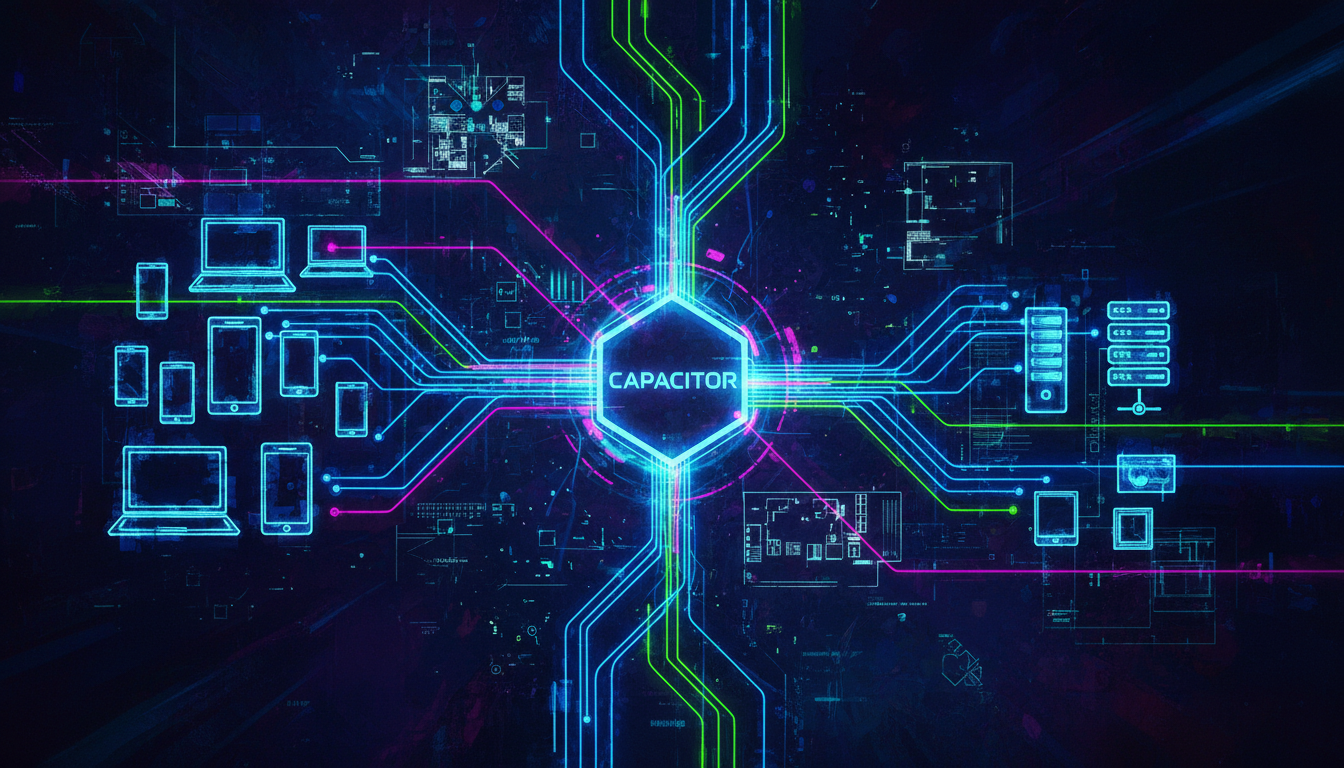
Capacitor offers a strategic advantage by enabling a single codebase to target multiple platforms. This simplifies data synchronization, minimizing the risk of data inconsistencies. Changes made offline are synchronized through a unified data layer, ensuring consistency across all devices and systems. This is especially critical for Dendro Logic’s focus on offline-first applications, where data reliability is paramount.
By leveraging web technologies (HTML, CSS, JavaScript) within a native container, Capacitor allows developers to build cross-platform applications without sacrificing access to native device features. This approach streamlines the development process and reduces the complexity of managing multiple codebases.
Automated Decision Trees and Capacitor
Dendro Logic specializes in structuring chaotic data into automated decision trees. Capacitor perfectly complements this approach by providing a consistent data layer across all platforms. A single decision tree can be deployed to web, iOS, and Android without requiring platform-specific adaptations, ensuring consistent logic and data-driven decisions regardless of the device used.
Imagine a logistics company using an automated decision tree to optimize delivery routes. With Capacitor, the same decision tree can be used by dispatchers on their web dashboards and by drivers on their mobile devices, ensuring that everyone is working with the same data and logic. This level of consistency is difficult to achieve with disparate native codebases.
Data-Backed Decisions vs. Gut Feeling
Relying on ‘gut feeling’ in enterprise operations is a recipe for disaster. Data architecture decisions must be based on a thorough understanding of the underlying data flows and the potential for inconsistencies. Capacitor provides a solid foundation for building data-centric applications that are reliable, scalable, and maintainable.
The data clearly shows that managing multiple native codebases increases the risk of data inconsistencies and synchronization errors. Capacitor offers a more efficient and reliable approach, particularly for offline-first applications where data integrity is critical.
Dendro Logic Perspective
At Dendro Logic, we believe in data-driven decision-making. Capacitor aligns perfectly with our philosophy of building robust, scalable, and maintainable applications. By simplifying data synchronization and reducing the complexity of managing multiple codebases, Capacitor enables us to focus on what we do best: structuring chaotic data into automated decision trees that drive business value.
Don’t let ‘gut feeling’ lead you down a path of data inconsistencies and operational inefficiencies. Schedule an audit with Dendro Logic to assess your current data architecture and discover how Capacitor can streamline your operations and ensure data integrity across all platforms.