Automated Decision Trees: Streamlining Logic in Offline-First Applications
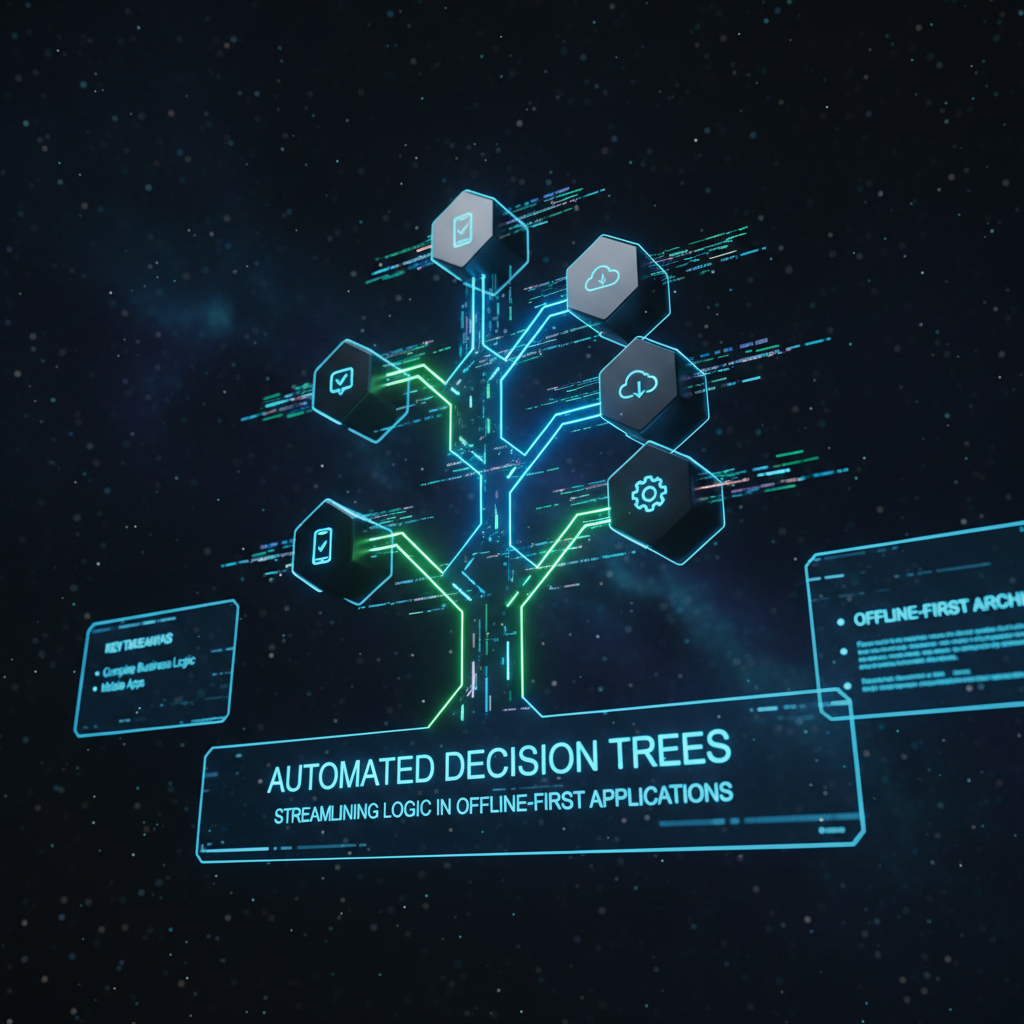
Automated Decision Trees: Streamlining Logic in Offline-First Applications
Key Takeaways
- Automated decision trees bring complex business logic directly into mobile apps.
- Offline-first architecture eliminates reliance on external APIs for real-time decisions.
- Reduced latency and continuous operation even without network connectivity.
- Transforms chaotic data into structured, automated processes.
Imagine a tree where each branch represents a decision, leading you step-by-step to the optimal outcome. Now, picture that tree existing within your mobile application, guiding users through complex processes even when they’re offline. This is the power of automated decision trees, a critical component in building robust, offline-first applications. They address the fundamental data accessibility problem faced by remote teams: critical processes can grind to a halt when network connectivity is lost.
From Chaos to Structure: The Database Normalisation Journey
Many organisations grapple with legacy systems and chaotic data structures. These systems often resemble a tangled web, making it difficult to extract meaningful insights and automate key processes. This is where the concept of database normalisation and structured logic comes into play, laying the foundation for effective decision trees.
The Problem: Data Silos and Logic Islands
Consider a logistics company managing deliveries. Their data might be scattered across multiple spreadsheets, legacy databases, and even paper records. Each department operates in its own silo, with inconsistent data formats and conflicting business rules. This creates ‘logic islands,’ where decisions are made based on incomplete or inaccurate information. Imagine trying to navigate a city with a map made of mismatched pieces. You’ll take the wrong turns and waste time, resources and fuel.
The Solution: Normalisation as the Blueprint
Database normalisation is the process of organising data to minimise redundancy and improve data integrity. Think of it as creating a blueprint for your data architecture. It involves breaking down large tables into smaller, more manageable ones, and defining relationships between them. This ensures that data is stored consistently and can be easily accessed and manipulated. By structuring the underlying data effectively, we pave the way for automated decision-making.
Building the Decision Tree: Branching Out from Normalised Data
Once the data is normalised, we can begin constructing the decision tree. Each node in the tree represents a decision point, based on specific data attributes. For instance, in our logistics example, a decision point might be: ‘Is the delivery address within a 50-mile radius of the depot?’. The branches emanating from that node represent the possible answers: ‘Yes’ or ‘No’. Depending on the answer, the user is guided down a different path, leading to a specific action or outcome.
The beauty of this approach is that the decision tree logic is embedded directly within the application. Instead of relying on external APIs for real-time decisions, the app can make intelligent choices based on the data it already possesses. This minimises latency and ensures continuous operation, even in areas with poor or no network connectivity. It’s like having an experienced dispatcher always on hand, even when the phone lines are down.
Offline-First Considerations: Planting the Seed
Building an automated decision tree for an offline-first application requires careful consideration. The entire decision tree logic must be stored locally on the device. Furthermore, the application must be able to handle data synchronisation seamlessly when network connectivity is restored. Consider it like planting a seed: even without constant sunlight (network), it still grows and develops based on its internal programming.
Real-World Applications: Harvesting the Benefits
The benefits of automated decision trees extend across various industries. In construction, they can guide field workers through safety inspections, ensuring compliance with regulations even on remote sites. In field services, they can help technicians troubleshoot equipment problems, providing step-by-step instructions based on diagnostic data. The result is increased efficiency, reduced errors, and improved customer satisfaction.
Dendro Logic Perspective
Automated decision trees are not just about automating tasks. They’re about transforming chaos into structure, empowering users to make informed decisions, and ensuring business continuity in the face of network limitations. By embracing a data-centric approach and leveraging the power of offline-first architecture, you can unlock the true potential of your mobile applications.
Ready to streamline your business logic and empower your teams with offline-first applications? Contact Dendro Logic today to audit your data architecture and discuss your specific needs.