Projects · Enterprise
CoreThread
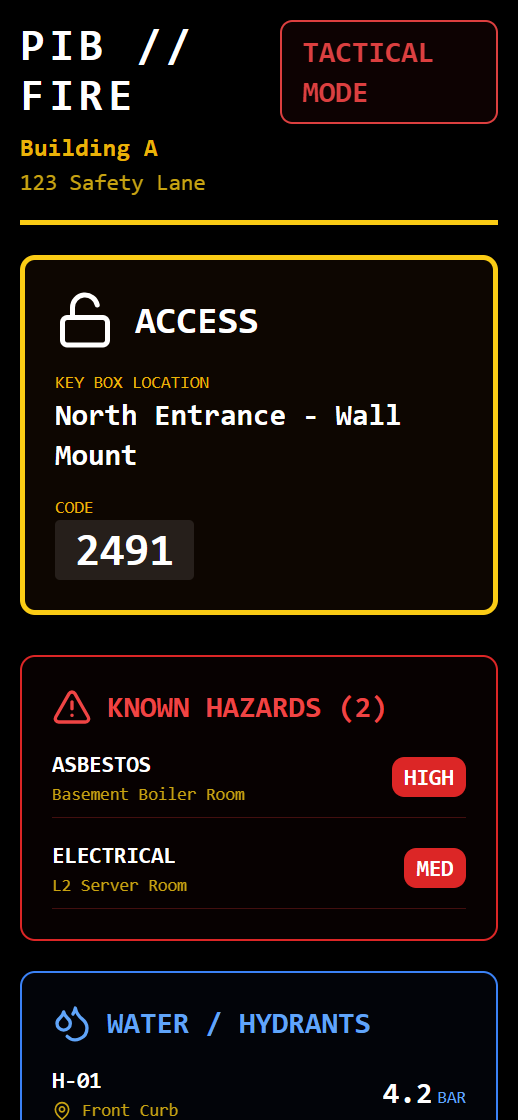
A UK building-safety compliance platform built for the Building Safety Act 2022. CoreThread digitises the Golden Thread across the eight regulated pillars of a building, with offline-first mobile tools that work in the rain, sovereign per-client data, and a human-in-the-loop AI assistant that suggests but never decides.

The Problem
The Building Safety Act 2022 expects every higher-risk building to carry a Golden Thread of information. An unbroken, auditable record of how it was designed, built, modified, inspected, and maintained. The regulator can ask for it at any point, and the evidence has to be produced in real time.
Most portfolios cannot answer that ask. Compliance lives in PDFs on shared drives, in chains of forwarded emails, in paper folders in site offices, and in the heads of long-serving staff. Site workers (surveyors, electricians, fire-door inspectors, gas engineers) are the people generating the data, but they are given desk-grade software that does not work where the work happens. On a roof. In a basement. In the rain. On patchy signal. So the data either does not get captured, or it gets captured twice, badly, weeks later.
What's at Stake
For building owners, fragmented compliance is now financial risk. Insurance premiums climb. Lenders ask harder questions. Sales and refinancing slow when due-diligence packs cannot be produced quickly. For site teams, it means double-handling and dangerous gaps. For residents, it means the safety case for their home is held together by other people's spreadsheets. The current pipeline does not pass the Building Safety Act test, and everyone knows it.
The Solution
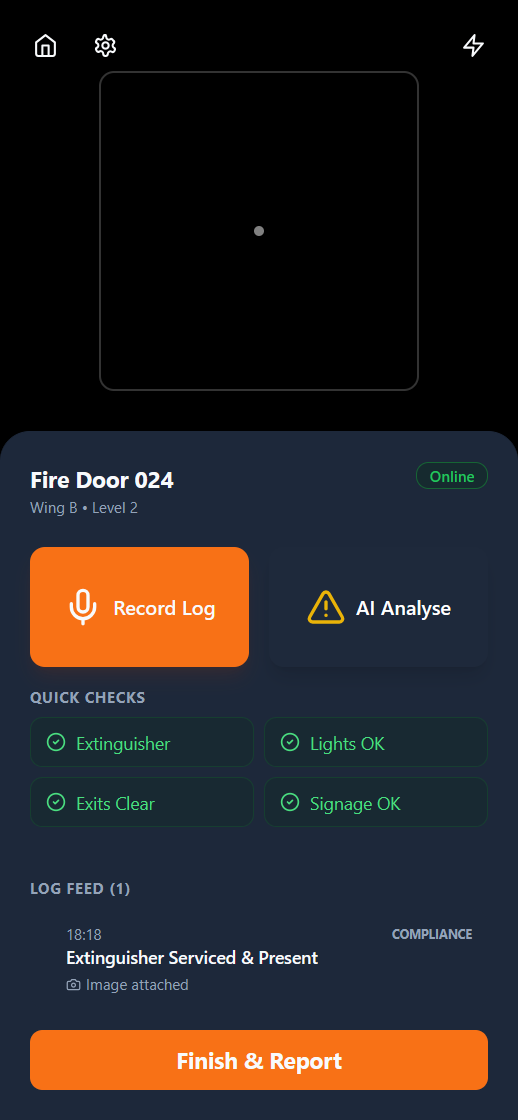
CoreThread is a UK-only compliance platform built around an 8-Pillar Model: Fire, Electrical, Gas, Water, Structural, Lifts (LOLER), Hazards, and Energy (EPC). Each pillar has its own regulatory engine, its own evidence shape, and its own colour-coded UI, so a fire-door inspector sees a fire-door interface, not a generic form. Every event flows into a single, Merkle-verified Golden Thread that exports straight to BS 8644-1 XML.
Built for Site Reality, Not Office Reality
The mobile app is offline-first. WatermelonDB on-device storage. A 72-hour offline lease via signed token, so a surveyor can work a full week in a rural site with no signal and re-sync cleanly when they get back. Rain Mode swaps to a big-button UI with offline Whisper speech-to-text for data entry in bad weather. Accessibility is non-negotiable: high-contrast palette, dynamic type to 200 percent, designed for poor lighting and gloved hands. If the tool fights the worker, the data does not get captured.
AI That Suggests, Never Decides
Mimir is CoreThread's AI assistant. It runs in two halves. Mimir Edge does on-device inference in under 100 milliseconds with no cloud calls, so a worker on a roof gets instant help on patchy signal. Mimir Cloud handles deeper reasoning when connectivity is back. Both are bound by a strict Human-in-the-Loop protocol. Above 0.9 confidence, Mimir auto-fills and the user validates. Between 0.7 and 0.9 it suggests. Below 0.7 it logs a quiet background flag, never a confident wrong answer. Every override requires a Reason Code.
Sovereign by Design
Each client gets a sovereign Spoke off a central Hub: separate VPC, separate database, separate storage. No cross-container joins. All data resides in eu-west-2 (London) with WORM-locked S3 evidence buckets. Account deletion is crypto-shredding: the encryption key is destroyed and the data becomes unreadable, the audit log keeps the receipt. Stolen-device wipe pushes a remote ACTION_WIPE that clears local SQLite and the keychain. Compliance is only worth what the data integrity behind it is worth.