Scalable Backend Architecture: The Nervous System of Modern Business
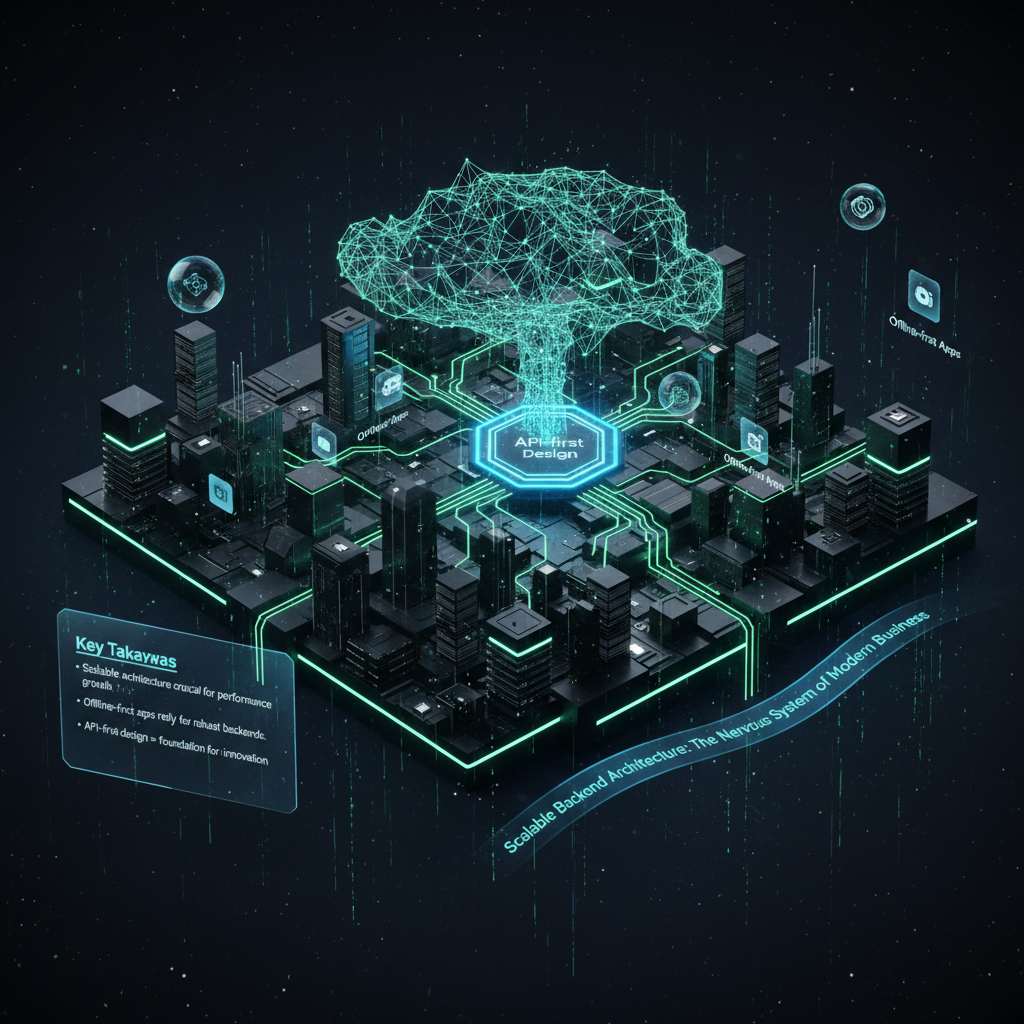
Key Takeaways
- Scalable architecture is crucial for performance as your business grows.
- Offline-first apps heavily rely on robust backend systems.
- API-first design is the foundation for a flexible and responsive business.
- Proactive auditing prevents bottlenecks and improves user experience.
The Foundation Crumbles: Why Scalability Matters
Imagine your business logic as the intricate wiring of a house. Initially, everything works perfectly, with a few lights and appliances connected. But as the family grows, more devices are plugged in, and the electrical system begins to strain. Overloading circuits leads to blackouts and frustrations. A scalable backend architecture acts as a modern electrical grid, prepared to handle increasing demands without faltering.
For businesses adopting offline-first mobile apps, especially in industries like logistics, construction, and field services, scalability isn’t just a nice-to-have feature. It’s the bedrock upon which reliable data synchronisation and business logic execution are built. Without it, the very benefits of offline accessibility become liabilities, hampered by slow performance and data inconsistencies as the user base expands.
API-First Design: Building the Nervous System
Consider an API-first approach as designing the nervous system of your business. Each API acts as a nerve, transmitting signals (data) between different parts of the organisation. These ‘nerves’ allow different applications to communicate with each other, ensuring consistent business logic. The legacy approach often involves building applications in silos, with hard-coded connections and limited flexibility. When business needs change, such systems are difficult and expensive to adapt.
API-first design prioritises the creation of well-defined, reusable APIs before any application development begins. This ensures that all systems, including offline-first mobile apps, can access and manipulate data through a consistent interface. This consistency is important because it reduces the likelihood of integration issues and allows you to optimise performance.
The Offline-First Imperative: Optimising Synchronisation
Offline-first applications introduce unique challenges to backend scalability. The system must efficiently manage data synchronisation between mobile devices and the central database, handling intermittent connectivity and potential conflicts. The backend architecture must be designed to support this complex process, ensuring data integrity and a seamless user experience.
Imagine a fleet of delivery drivers using an offline-first app to manage their routes and deliveries. Each driver might be working in areas with limited or no mobile signal. The app needs to store data locally and synchronise it with the backend system when a connection is available. A scalable backend can handle the simultaneous synchronisation requests from hundreds or thousands of drivers without compromising performance. Optimised synchronisation protocols minimise the amount of data transferred, reducing bandwidth usage and improving speed.
Preventing Bottlenecks: Proactive Auditing
Identifying and addressing potential bottlenecks is vital to maintaining a scalable backend architecture. Regular audits should be conducted to assess the performance of the system and identify areas for optimisation. This includes monitoring database query performance, API response times, and data synchronisation processes. Imagine a plumbing system where a small blockage can lead to a significant reduction in water pressure. Proactive auditing is like regularly inspecting the pipes to identify and clear any obstructions before they cause major problems.
By proactively auditing the architecture, teams can optimise database queries, refactor inefficient code, and improve the overall efficiency of the system. Load testing is another crucial technique for identifying bottlenecks. Simulate peak usage scenarios and measure the system’s performance under stress. This helps identify the breaking points and allows engineers to implement solutions before they impact real users.
Dendro Logic Perspective
At Dendro Logic, we understand that a scalable backend architecture is more than just a technical requirement. It’s a strategic imperative that enables businesses to adapt to changing market conditions and deliver exceptional user experiences. Our expertise lies in building robust and scalable backend systems that support offline-first mobile apps, ensuring that your business logic remains performant, reliable, and accessible, regardless of connectivity. We see the backend as the central nervous system, and a healthy nervous system guarantees a responsive and agile business.
Is your current backend architecture struggling to keep up with your growing business needs? Contact Dendro Logic today to discuss an audit of your current system.